If you sell hi-vis safety apparel to both the United States and European markets, you face a common dilemma: ANSI/ISEA 107 and EN ISO 20471 are both respected standards — but they're not identical. Understanding how they align and where they diverge is critical for compliant, cost-effective sourcing.
ANSI/ISEA 107 (American National Standard) classifies garments into Classes 1, 2, and 3 based on the amount of fluorescent background and retroreflective material. The 2020 version also introduces performance Types (R, O, P) and material performance levels.
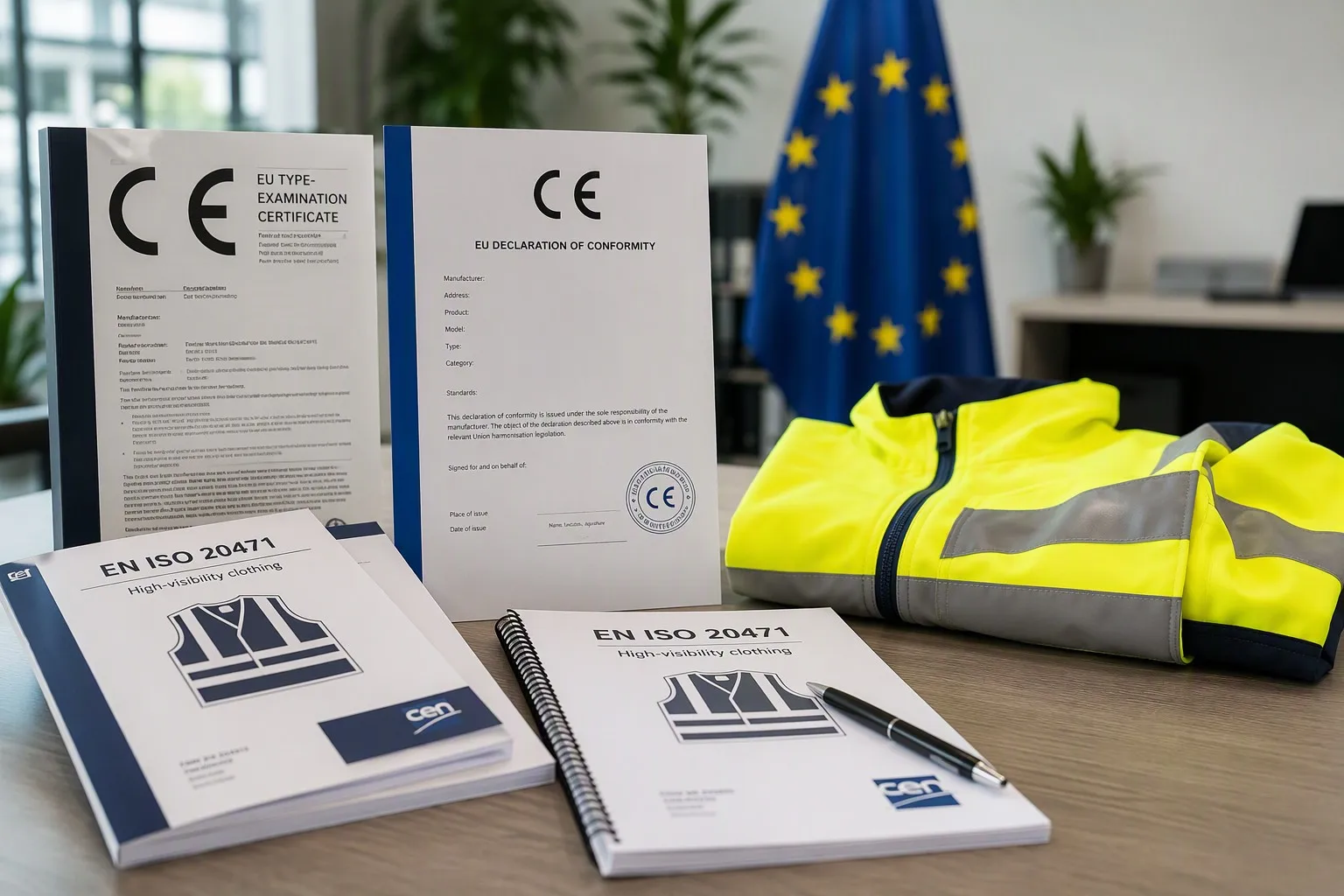
EN ISO 20471 (European/International Standard) similarly defines three classes, but uses metric measurements and has slightly different minimum material requirements. It also requires conformity assessment by a Notified Body under EU PPE Regulation 2016/425.
| Feature | ANSI/ISEA 107-2020 | EN ISO 20471:2013+A1:2016 |
|---|---|---|
| Classes | Class 1, 2, 3 | Class 1, 2, 3 |
| Background material (Class 2) | ≥ 0.50 m² | ≥ 0.50 m² |
| Retroreflective material (Class 2) | ≥ 0.13 m² | ≥ 0.13 m² |
| Color requirements | Fluorescent Yellow-Green, Orange-Red, Red | Fluorescent Yellow, Orange-Red, Red |
| Third-party certification | Not mandated (but recommended) | Required (Notified Body) |
| Market applicability | USA, Canada | EU, UK, Australia (AS/NZS 4602) |
Yes — dual-certified garments exist and are increasingly popular for global distributors. To achieve dual certification, the garment must meet the more stringent requirement of each element. WX Reflective produces dual ANSI/EN ISO certified products with full documentation for both markets.
WX Reflective — factory-direct manufacturer, MOQ 100 pcs, ANSI & EN ISO certified, custom logo available.
Get a Free Quote